


"Everybody Lies" Book Review
- Nov 25, 2019
- 3 min read
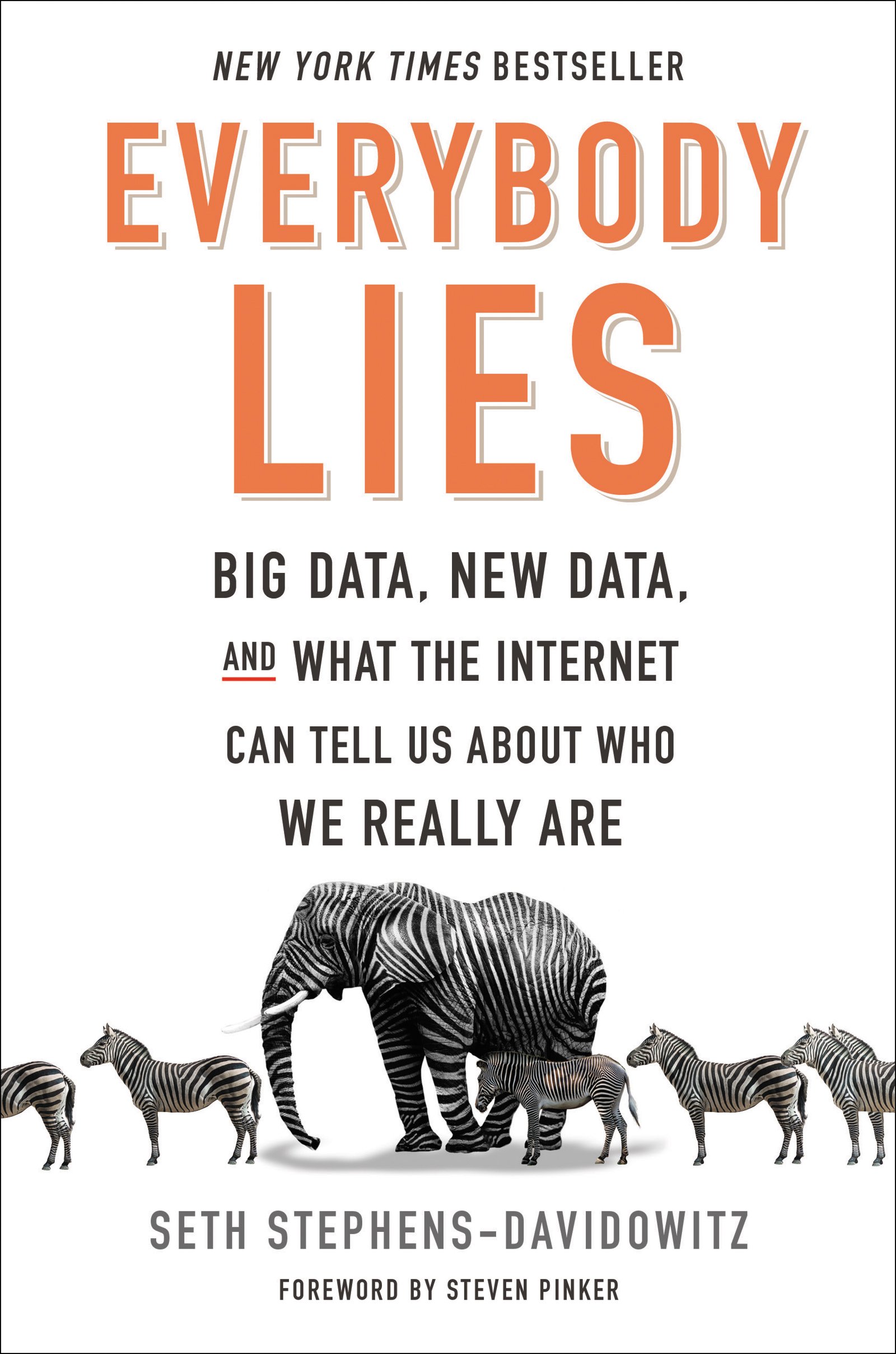
Everybody Lies by Seth Stephens-Davidowitz introduces the concept of Big Data, and how valuable it can be when revealing truths about the human psyche. The author argues that by analyzing sources such as Google Trends, it becomes evident that a lot of the information we thought we knew about society is false. Stephens-Davidowitz stresses the importance of quality over quantity when it comes to Big Data, and that it is not necessarily about the amount of data you have, but how useful it is. Stephens-Davidowitz provides an explanation for the size of a dataset being overrated, “the bigger an effect, the fewer the number of observations necessary to see it” (Stephens-Davidowitz 21). The author explains Big Data one chapter at a time, illustrating what it is, examples of how we can utilize it, what it cannot do, and what we should not do with it.
One aspect of Seth Stephens-Davidowitz’s research which successfully supported his argument was in chapter four, “Digital Truth Serum”, specifically the section on the truth about hate and prejudice. This section illuminates just how important Google searches are when discovering the true prevalence of racism. Stephens-Davidowitz explains that people tend to keep their prejudices to themselves, turning to Google to express their thoughts (Stephens-Davidowitz 128). An article focusing on this section emphasizes the idea that Google searches reveal people’s darkest thoughts, especially bigoted ones. The example from the book highlighted in this article is the reactions to a speech Obama gave after the 2015 terrorist attack in San Bernadino, California. While Obama was speaking, searches for “kill all Muslims” increased, doing more harm than good. In a later speech, Obama took a different approach from lecturing and evoked curiosity by stating that Muslims are our neighbours and co-workers, which led more people to search for more positive terms such as “Muslim athletes” (McBain 2017). This section of Everybody Lies reveals that although the traditional media may suggest that something has been received well by the public, Google search data can reveal that the truth is the exact opposite.

The section that was insufficiently supported was also in chapter four, “Digital Truth Serum”, in the section on the truth about sex. The first few pages of this section focus on the infamous question of how many American men are gay. Seth Stephens-Davidowitz goes into depth on this topic, pulling statistics from Google and PornHub searches, as he feels this is some of the most important data. The issue with this section is that it does not have any information on gay women in America. Stephens-Davidowitz defends this by stating that he has not been able to come up with an estimate of same-sex attraction for women because women do not watch pornography as frequently as men, and straight women often watch lesbian porn (Stephens-Davidowitz 116). However, the author could have pulled data from Google searches of women questioning their sexuality, just as he did for men.

Annotated Works Cited
Galen Strawson. “Everybody Lies by Seth Stephens-Davidowitz Review -- What Internet Searches Reveal; Do Web Porn Clicks Deliver Data That 'Freud and Foucault Would Have Drooled over', or Are We Not as Weird as Our Online Behaviour Suggests?”, The Guardian (London, England), August 17, 2017.
Strawson discusses Seth Stephens-Davidowitz's argument that pornography habits are crucial to understanding human sexuality, supporting this claim and discussing certain
examples from the book
Lohr, Steve."The age of big data." New York Times, 2012.
Lohr explains the concept of big data, and how useful it can be. He explains the impact of data abundance, and that we live in an age where there is a wealth of data.
McBain, Sophie. “How Google Searches Reveal Our Dark Side: the Internet's Bigotry Problem. New Statesman, vol. 146, no. 5383, 2017, p. 17.
McBain references to Everybody Lies and how it reveals that we can discover a lot about the human psyche by looking at what people search into google. It takes this information and references to the bigotry in society, and how embracing the curious questions of others can be beneficial in combatting bigotry.
Stephens-Davidowitz, Seth. Everybody Lies: What the Internet Can Tell Us About Who We Really Are, HarperCollins Publishers, 2017.
Stephens-Davidowitz introduces the concept of Big Data, and how it can be utilized to understand more about the human psyche. He explores demonstrates that what we think we know about society is a lie.


Comments